Birthright
Four days before The United States celebrated July 4, which marks the 250thanniversary of its Independence, the country’s Supreme Court delivered a much anticipated, watershed judgment.
The current Middle East crisis demonstrates that American power has not vanished, but rather that dominant powers struggle to enforce their will in a fractured global landscape.




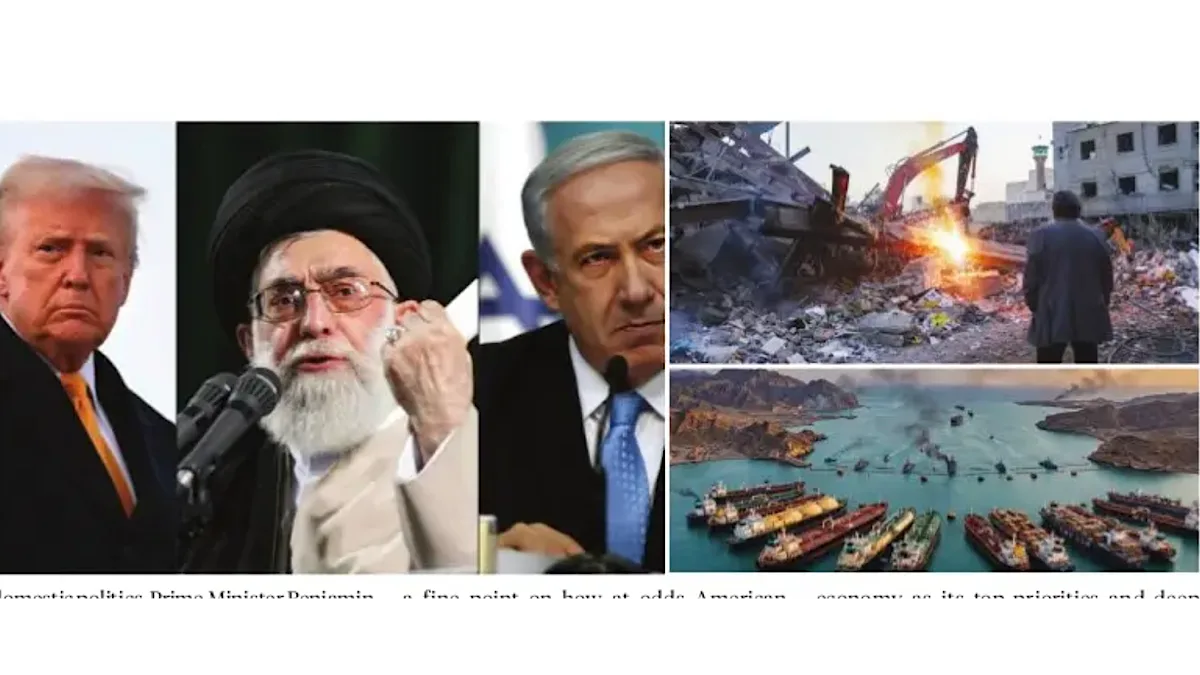
Photo:SNS
The current Middle East crisis demonstrates that American power has not vanished, but rather that dominant powers struggle to enforce their will in a fractured global landscape. Washington has made no end of efforts to put the region right and broker an end to hostilities. However, Israel has gone ahead with military action anyway, putting at risk the very diplomatic accords the U.S. has laboured over.
In the end, it is more than just another crisis in the Middle East; it is a direct affront to American authority, not to mention the threat it poses to global economic stability. President Trump has invested significant political influence in maintaining ceasefires and open passage through the Strait of Hormuz. That waterway accounts for some 20 per cent of the world’s oil trade. There were recent understandings with Tehran designed to calm energy markets and get maritime commerce back on track as a prelude to talks on Iran’s nuclear programme.
Advertisement
Instead, fresh military activity between Israel and Hezbollah in Lebanon has done damage to those agreements and left Iran to make threats about access through the Strait of Hormuz. Such Israeli arrogance is attributable to the divergence in strategic objectives between Washington and Jerusalem. The Trump administration is after a measure of stability. It wants to see energy prices come down, trim its military involvement, and have some diplomatic wins to point to as foreign policy successes. Israel is operating on a different set of numbers.
Advertisement
A ceasefire with Hezbollah or Iran’s influence in the region left unchallenged is nothing more than a deferral of the next round of hostilities for Israel’s security establishment. Israeli leaders would often feel they had no choice but to apply military pressure despite Washington’s restraint. They are making it clear that what they are doing is a necessary response to the threats and transgressions of their enemies. Adding to divergent regional interests is domestic politics. Prime Minister Benjamin Netanyahu is experiencing considerable domestic pressure. Ever since the Hamas onslaught in October 2023, security has dominated the political landscape in Israel.
In that climate, caving in to foreign restraints can be a liability. For Israeli officials, legitimacy rests on showing they have the mettle to act militarily rather than appeasing American diplomats. Their conduct is less an act of defiance than the product of a political culture that values its own autonomy. Then there is the bigger question of American influence. One has to wonder how Israel can so consistently have its way with events in the face of what looks like clear disapproval from the U.S. One explanation lies in the imbalance in the relationship between the two countries.
True, Israel is heavily reliant on America for its military, diplomatic, and financial backing. However, over time, one American administration after another has made a political point of standing behind Israel. It is a paradox: Washington has all the leverage in the world but cannot apply it to Israel. This configuration yields substantial operational autonomy despite Israel’s established dependence. It is readily apparent that the Israeli leadership understands their American counterparts are unlikely to destabilize the alliance, regardless of any displeasure. Consequently, disagreements are more likely to be verbal rather than consequential.
For Trump, there are options. He could tie the next tranche of military aid to Israel’s honouring of its ceasefire obligations. He could make it plain that continued support is contingent on strategic coordination. However, that would be a domestic political liability and would run into opposition in Congress and among policymakers. So the problem for him is not a lack of cards to play but the inclination to use them. The Trump administration has given a temporary green light to Iranian oil exports, which only muddies the waters. In one sense, Washington is acknowledging it has no choice but to stabilize the global energy market and get the Strait of Hormuz open again; these are unavoidable economic imperatives.
However, the decision also puts a fine point on how at odds American de-escalation is with what regional powers are thinking from a security standpoint. The US administration is making it plain that its first priority is to put things back to normal economically and see energy flow freely, even when the situation on the ground makes for frustrating reading. There is a more contentious way to read the latest developments: the rift between Washington and Jerusalem is not as real as it seems. Take the case of Trump’s open irritation with what Israel is up to.
Perhaps it is perfectly compatible with a quiet nod to some military overreach on their part, so long as it is in America’s economic or strategic interest. These ripples heighten the need for security assurances, inflate the cost of American energy exports and arms transactions with apprehensive regional neighbors, and solidify America’s significance during an era of increasing global multipolarity. However, one would be hard-pressed to find much in the way of proof for such claims. The United States has its own skin in the game when it comes to the costs of a protracted mess: inflation, volatile financial markets, trade disruptions, and higher oil prices are burdens we cannot ignore.
The Trump administration has been quite clear that stabilizing the region and keeping energy costs down are policy priorities. While it is easy for critics to suspect Washington is reaping indirect rewards from controlled chaos, there is no solid basis to say Trump is countenancing ceasefire violations for a commercial payoff. One must not ignore the reticence displayed by China and Russia. They have been denouncing Western interventionism and touting multipolarity for years. However, neither has shown the least intention or ability to step in and mediate the current crisis.
Beijing is being circumspect for good reason. With energy security and the economy as its top priorities and deep commercial ties in the Gulf, it has no desire to get drawn into a military quagmire; it is not taking any chances. Moscow is in much the same boat. With complicated dealings with Iran, Israel, and various Arab states on top of the Ukraine War, the resources and motivation to do something are not there. Neither wants to be left holding the bag for a conflict the U.S. itself has trouble containing. India can afford no passivity in this matter. With its economic interests put at risk by the trouble in Hormuz, inaction is simply not on the table. Instability in Hormuz and oil price spikes are visibly affecting India due to its reliance on Gulf energy.
What New Delhi needs to do is to mount a diplomatic offensive of its own. To begin, it is advisable to collaborate with other prominent Asian consumers, specifically China, South Korea, and Japan, to establish a unified strategy for safeguarding maritime commerce. India should also deepen ties with the Gulf monarchies, Iran, and the U.S., clarifying that it is a stakeholder in regional stability and not merely looking on from the sidelines. Moreover, to lessen the impact of any future shocks, New Delhi must get on with diversifying its strategic reserves and supply lines.
There is analytical interest in the present moment for what it reveals about a structural shift in international politics. The post-Cold War era was founded on the assumption that the United States could simultaneously fulfill the roles of security guarantor, ally management, and facilitator of global trade. For India, China, Japan, South Korea, and most of Europe, being able to navigate these waters is an economic imperative, not an abstract notion.
If recurring disputes in the region jeopardize the world’s foremost energy conduit, the situation escalates from a Middle Eastern security concern to a matter of global governance. The fragmented international system exhibits a lack of purpose. The most troubling thing about this crisis is not that power is dissipating, responsibility is. Should key stakeholders be capable of implementing measures but decline to address deficiencies, there is no escaping this enduring state of disquiet.
(The writer is Professor, Department of International Relations, Jadavpur University, Kolkata)
Advertisement